
DJI Mini 5 Pro vs Mini 4 Pro vs Mini 4K: Which Sub-250 g Drone to Buy in 2026
All three Minis weigh under 250 g, so none needs FAA registration for recreational flying. The differences are in the sensor, obstacle sensing and how much you pay. Here is how to choose.
.webp)
Specs at a glance
| Mini 5 Pro | Mini 4 Pro | Mini 4K | |
|---|---|---|---|
| Sensor | 1-inch CMOS, 48 MP | 1/1.3-inch CMOS, 48 MP | 1/2.6-inch CMOS, 12 MP |
| Max video | 4K/120 fps, D-Log M, HDR | 4K/60 fps HDR, 4K/100 fps slow-mo, D-Log M | 4K/30 fps |
| Obstacle sensing | Omnidirectional + forward LiDAR | Omnidirectional | Downward only |
| Flight time | Up to 36 min (Plus battery ~52 min) | Up to 34 min (Plus battery ~45 min) | Up to 31 min |
| Transmission | O4, 20 km (FCC) | O4, 20 km (FCC) | O2, 10 km (FCC) |
| Subject tracking | ActiveTrack 7.0 | ActiveTrack 360° | QuickShots only |
| Weight | < 249 g | < 249 g | < 249 g |
| Dealer price from | $630.58 | $486.75 | $150.75 |
Prices are ASI Computer authorized-dealer prices in USD for the base bundle; Fly More combos add two extra batteries, a charging hub and a bag.
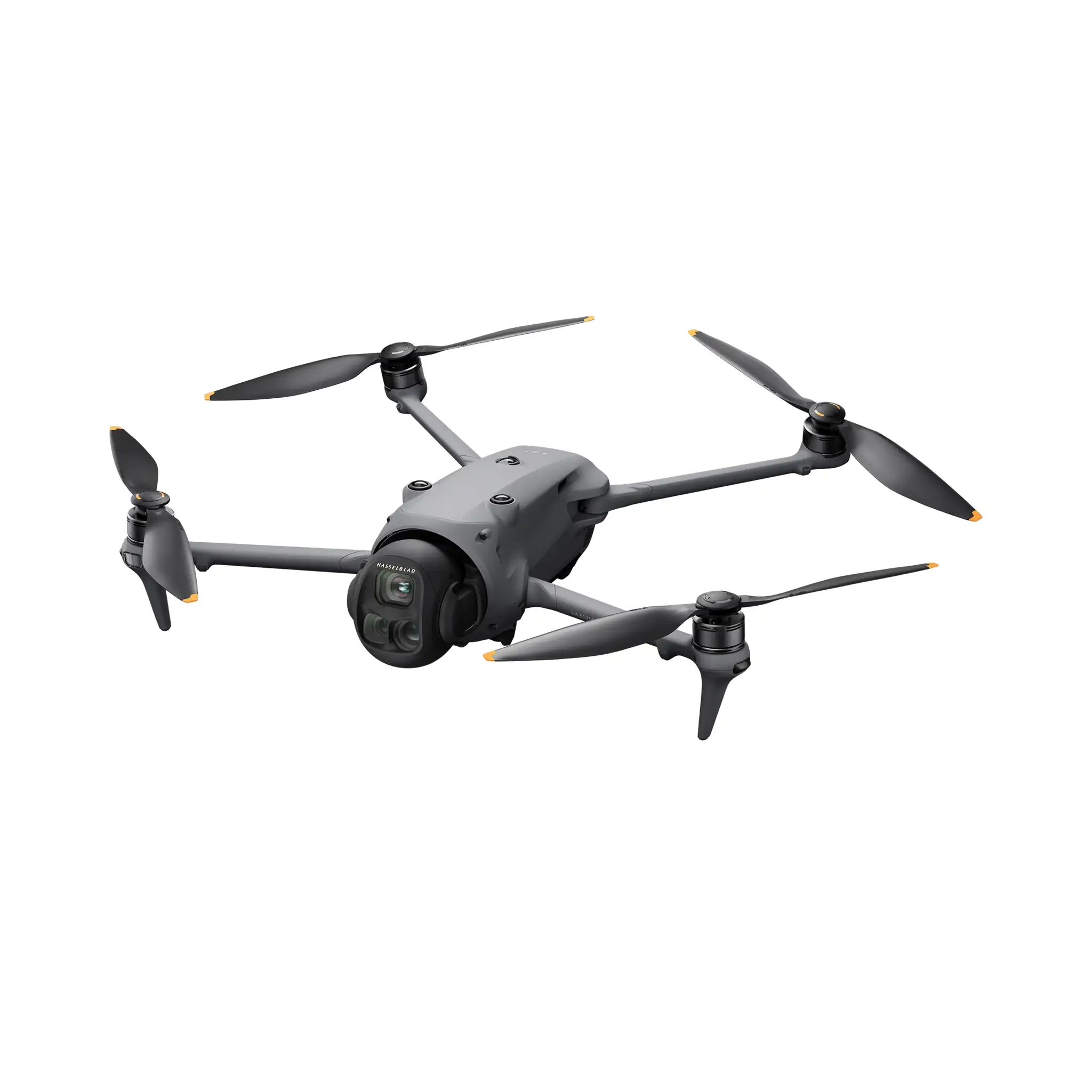
DJI Mini 5 Pro — the first 1-inch Mini
The headline change in the DJI Mini 5 Pro is the 1-inch sensor, previously reserved for the Air series. In practice that means cleaner shadows at dusk, more latitude in D-Log M grading and noticeably better dynamic range in high-contrast scenes such as sunsets over water. The forward LiDAR module helps obstacle sensing work at night, when vision sensors alone struggle, and ActiveTrack 7.0 tracks a cyclist or car through trees far more reliably than earlier Minis.
Who should buy it: creators who publish paid work, real-estate photographers who cannot re-shoot, and anyone who regularly flies at golden hour or later.
DJI Mini 4 Pro — the value pro pick
The DJI Mini 4 Pro remains one of the most complete drones under 250 g. Omnidirectional obstacle sensing, 4K/60 HDR and 10-bit D-Log M cover most creator needs. At $486.75 for the RC-N2 bundle, it is roughly $120 less than the Mini 5 Pro and the images are hard to tell apart in daylight. Vertical shooting (true sensor rotation) is a small but useful advantage for social video.
Who should buy it: hobbyists stepping up from a beginner drone, travel vloggers, small businesses that want obstacle sensing without paying for the 1-inch sensor.
DJI Mini 4K — the $150.75 starter
The DJI Mini 4K is the entry point: a 12 MP sensor, stabilised 4K/30 video, 31 minutes of flight and the older O2 link. There is no obstacle avoidance, so it suits open spaces and careful pilots. For under $300 it is an excellent first drone, a training aircraft for a school program, or a spare for a content team.
Who should buy it: first-time pilots, education programs, gift buyers, and anyone who wants aerial photos rather than cinematic video.
What about the Mini 3?
The DJI Mini 3 sits between the 4K and 4 Pro: the same 1/1.3-inch 48 MP sensor as the Mini 4 Pro, 38 minutes of flight, but no obstacle avoidance and 4K limited to 30 fps. At $193.63 it is the best-value camera in the Mini range if you are confident flying without sensors.
Controller choice matters more than you think
Every Mini is sold in bundles with either a phone-holder controller (RC-N1C/RC-N2/RC-N3) or the DJI RC 2 with a built-in screen. If you fly in bright sun or for more than a few minutes at a time, the RC 2 is worth the premium: no phone overheating, no notifications, faster start-up. Resellers should note that RC 2 bundles turn over faster in our experience.
Our recommendation
- Best overall: Mini 5 Pro Fly More Combo (RC 2) — pro image quality with no registration hassle.
- Best value with obstacle sensing: Mini 4 Pro (RC-N2) at $486.75.
- Best first drone: Mini 4K Fly More Combo — three batteries for well under $350.
All three are FCC-authorized and ship to US and Canadian addresses from ASI Computer. Volume pricing is available for schools, retailers and content teams — see our reseller program.
Products in this guide
18% off MSRP
DJI Mini 5 Pro
1" CMOS 48MP · 4K/120fps D-Log M · 35Min · O3 · 249g · ActiveTrack 7.0
.webp) 25% off MSRP
25% off MSRP
DJI Mini 4 Pro
1/1.3" CMOS 48MP · 4K/60fps HDR · 34Min · O4 · 249g
.webp) 25% off MSRP
25% off MSRP
DJI Mini 4K
1/2.6" CMOS 12MP · 4K/30fps · 31Min · O2 · 249g
.webp) 33% off MSRP
33% off MSRP
DJI Mini 3
1/1.3" CMOS 48MP f/1.7 · 4K/30fps HDR · 38Min · O2 · 248g
Frequently Asked Questions
Does a DJI Mini need to be registered with the FAA?
For purely recreational flying, drones under 250 g (0.55 lb) do not need FAA registration. If you fly for any business purpose — including real-estate photos or paid content — you need Part 107 certification and must register the aircraft regardless of weight. In Canada, sub-250 g drones are exempt from registration and pilot certification but still subject to safety rules.
Is the Mini 5 Pro worth the extra money over the Mini 4 Pro?
If you shoot in low light, want 1-inch sensor image quality or use ActiveTrack for moving subjects, yes. If you mostly fly in daylight and post to social media, the Mini 4 Pro delivers very similar 4K results for less.
Which Mini has obstacle avoidance?
The Mini 5 Pro and Mini 4 Pro have omnidirectional obstacle sensing. The Mini 4K and Mini 3 have downward sensors only, so they rely on the pilot to avoid obstacles.
What is the difference between the RC-N3 and RC 2 controllers?
The RC-N3 uses your phone as the screen. The RC 2 has a built-in 5.5-inch display, so you fly without draining or overheating your phone. Bundles with the RC 2 cost more, and the RC 2 can also be bought separately.
Sources & Further Reading
Talk to a DJI specialist at ASI Computer
Authorized dealer pricing, volume discounts and honest lead times — reply within one business day.
.webp)
.webp)